Sweet potatoes are among the most versatile and nutritious vegetables you can grow, whether in small urban spaces or larger rural areas. Rich in vitamins, minerals, and fiber, this tuberous root has increasingly gained space in home gardens due to its ease of cultivation and high nutritional value. This guide presents all the necessary steps for you to achieve an abundant and healthy harvest.
Crop Characteristics
Sweet potato (Ipomoea batatas) is a perennial plant cultivated as an annual, belonging to the morning glory family. It develops best in tropical and subtropical climates, with temperatures between 75°F and 86°F (24°C and 30°C). One of the great advantages of this crop is its drought resistance and adaptability to different soil types, although it prefers light and well-drained soils.
Selection of Slips and Seedling Preparation
Sweet potato planting is not done through seeds, but through slips or vegetative cuttings. You can obtain your slips in three ways: purchasing slips from producers, using sweet potatoes bought at the market, or utilizing slips from previous plantings.
To produce slips from sweet potatoes, select healthy tubers without spots or signs of disease, weighing between 3 and 5 ounces (80 and 150 grams). Place them in beds or boxes with moist sand, burying about two-thirds of the potato. Keep the substrate lightly moist in a location with good light. After 30 to 40 days, the slips will be ready for transplanting when they reach approximately 12 inches (30 centimeters) in length.
The slips should have between 4 and 6 nodes, be vigorous and pest-free. Cut them in the morning or late afternoon to avoid excessive water stress.
Soil Preparation
The ideal soil for sweet potatoes is light, loose, and well-drained, with a pH between 5.5 and 6.5. Clay and compacted soils hinder root development, resulting in deformed and undersized potatoes.
Conduct soil analysis to identify correction needs. Preparation should begin with deep plowing or digging, followed by breaking up clods. Incorporate well-aged organic matter, such as compost or cow manure, at a rate of 9 to 13 tons per acre for commercial crops, or about 6 to 8 pounds per square yard in home gardens.
The formation of ridges or mounds is fundamental to cultivation success. These should be between 12 and 16 inches (30 and 40 centimeters) high and 32 inches (80 centimeters) wide at the base, providing better drainage and facilitating tuberous root development. Spacing between ridges varies from 32 to 40 inches (80 to 100 centimeters).
Planting the Slips
Planting should be done at the beginning of the rainy season or during periods with irrigation availability. There are two main methods:
Horizontal planting: slips are laid horizontally on the ridge and covered with soil, leaving only the tip exposed. This method favors greater root production.
Inclined or vertical planting: slips are buried at a 45-degree angle or vertically, with 2 to 3 nodes under the soil. This system facilitates management and harvesting.
Spacing between plants varies from 10 to 16 inches (25 to 40 centimeters), depending on variety and vegetative vigor. After planting, irrigate immediately to ensure slip establishment.
Irrigation and Water Management
Although drought-resistant, sweet potatoes need adequate moisture, especially in the first 60 days after planting. Lack of water during this period significantly reduces productivity.
Irrigate regularly for the first two months, keeping the soil moist but never waterlogged. After complete plant establishment, gradually reduce frequency. In the 15 to 20 days preceding harvest, completely suspend irrigation to improve tuber quality and facilitate harvesting.
Fertilization
Fertilization should be based on soil analysis, but general recommendations include the application of potassium-rich fertilizers, an essential nutrient for tuberous root development. Sweet potatoes respond well to organic fertilization, which improves soil structure and tuber quality.
In commercial crops, apply approximately 36 pounds of nitrogen, 89 pounds of phosphorus, and 107 pounds of potassium per acre. Potassium top-dressing can be done 40 to 50 days after planting. Avoid excess nitrogen, which stimulates excessive vine growth at the expense of roots.
Weed Control
Keep the crop free of weeds, especially in the first 60 days, the critical competition period. Control can be done through manual weeding or use of mulch.
Soil coverage with straw or other organic materials presents multiple benefits: reduces weed emergence, conserves moisture, regulates soil temperature, and adds organic matter as it decomposes.
Pests and Diseases
Sweet potatoes are relatively resistant, but some pests and diseases can affect production:
Sweet potato weevil: larvae that bore into tubers. Control involves crop rotation, use of healthy slips, and elimination of crop residues.
Stem rot: fungal disease that causes rotting of the plant crown. Prevention through good drainage and use of healthy seedlings.
Viruses: transmitted by aphids, cause yellowing and leaf deformation. Always use certified, virus-free slips.
Regular plant inspection allows early problem identification and adoption of control measures before they cause significant damage.
Harvest
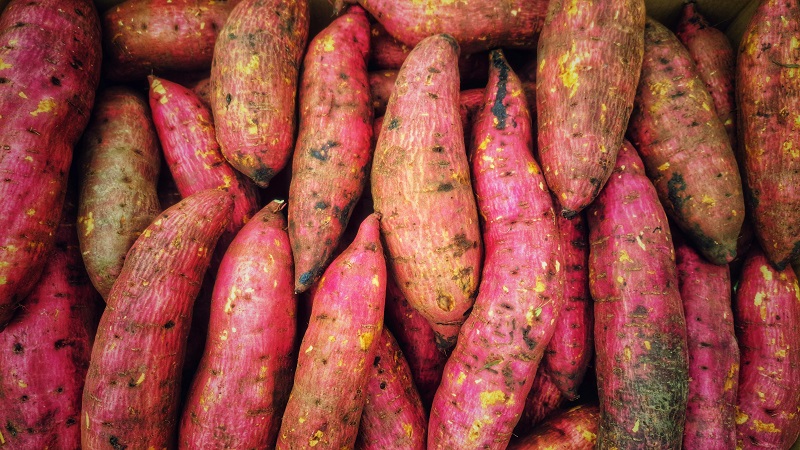
Sweet potatoes are ready for harvest between 120 and 150 days after planting, depending on variety and climate conditions. Maturation signs include leaf yellowing and visible tuber enlargement.
Harvest on dry days, preferably in the morning after dew dries. Carefully lift the ridges with a hoe or plow, exposing the roots. Handle tubers carefully to avoid cuts and bruises that reduce storage time.
Curing and Storage
After harvest, sweet potatoes should undergo a curing process that heals small wounds and improves flavor. Keep tubers in a ventilated location with temperatures around 86°F (30°C) and high relative humidity (85-90%) for 5 to 7 days.
After curing, store in a cool (54-59°F or 12-15°C), dry, and ventilated location. Well-cured and properly stored sweet potatoes can last several months.
Final Considerations
Sweet potato cultivation is rewarding for both commercial producers and home gardeners. With adequate soil preparation techniques, irrigation management, and phytosanitary care, it’s possible to obtain yields of 6 to 10 tons per acre in commercial crops, or abundant harvests in home gardens.
Crop rotation with legumes or grasses helps maintain soil health and reduce problems with pests and diseases. Try different varieties to discover those that best adapt to your local conditions and culinary preferences. With dedication and the knowledge presented in this guide, you’ll be ready to successfully cultivate this nutritious and flavorful vegetable.
Leia também: How to Grow Potatoes: A Complete Guide for U.S. Growers