
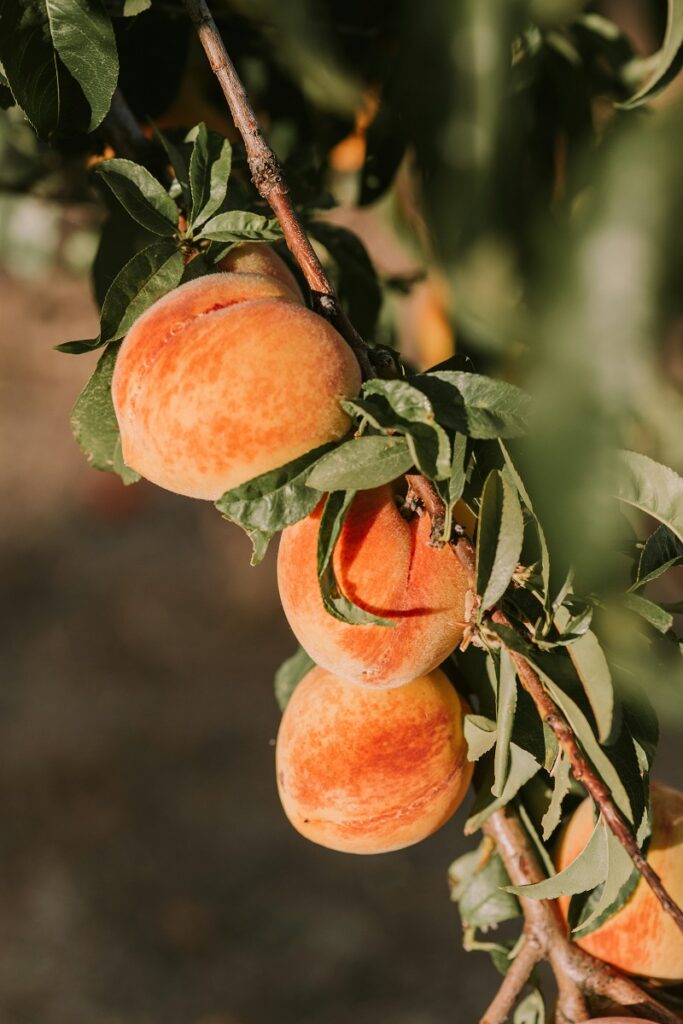
The United States offers diverse climatic conditions suitable for growing a wide range of fruit trees, from tropical species in Florida and Hawaii to cold-hardy varieties in northern states. American fruit production represents a significant portion of the agricultural economy, supplying domestic markets and contributing to exports. This comprehensive guide provides essential information for commercial orchardists and home gardeners interested in successful fruit tree cultivation.
Orchard Planning
Site Selection
Proper site selection is critical for orchard success. Consider the following factors:
Hardiness Zone: Consult the USDA Plant Hardiness Zone Map to ensure selected fruit varieties can survive your winter temperatures. Most fruit trees are rated for specific zones (e.g., “hardy to Zone 5”).
Chill Hours: Many temperate fruit trees require a certain number of hours below 45°F (7°C) during winter dormancy to break bud properly in spring. Requirement ranges from 100 hours for low-chill varieties to 1,000+ hours for high-chill varieties.
Topography: Gentle slopes (2-8%) provide good air drainage, reducing frost risk. Cold air flows downhill, so avoid low-lying “frost pockets.” South-facing slopes warm earlier in spring but may advance bloom too early in some regions.
Air Circulation: Good air movement reduces disease pressure but strong winds damage trees and fruit. Windbreaks may be necessary in exposed locations.
Soil Drainage: Most fruit trees require well-drained soil. They cannot tolerate “wet feet” – standing water or saturated soil kills roots. Raised beds or tile drainage may be necessary on poorly drained sites.
Water Access: Irrigation is essential in arid regions and beneficial in most areas for consistent production. Proximity to reliable water sources is important.
Soil Type: Deep, fertile loam is ideal, but many fruits adapt to various soil types. Soil testing before planting identifies pH and nutrient needs.


Soil Testing and Preparation
Conduct soil tests 6-12 months before planting:
pH requirements: Most fruit trees prefer pH 6.0-7.0. Blueberries are notable exceptions, requiring acidic soil (pH 4.5-5.5).
Nutrient levels: Test for nitrogen, phosphorus, potassium, and micronutrients. Address deficiencies before planting.
Organic matter: Incorporating compost improves soil structure, water retention, and nutrient availability.
Drainage testing: Dig test holes 18-24 inches deep, fill with water, and observe drainage. Water should drain within 24 hours.
Spacing and Density
Spacing depends on:
- Species and rootstock (tree size at maturity)
- Training system (standard, semi-dwarf, dwarf, high-density)
- Soil fertility and climate
- Equipment access needs
- Budget and management intensity
Modern orchards often use high-density plantings with dwarf rootstocks and intensive management for earlier production and higher yields per acre.
Major Temperate Fruit Trees
Apple (Malus domestica)
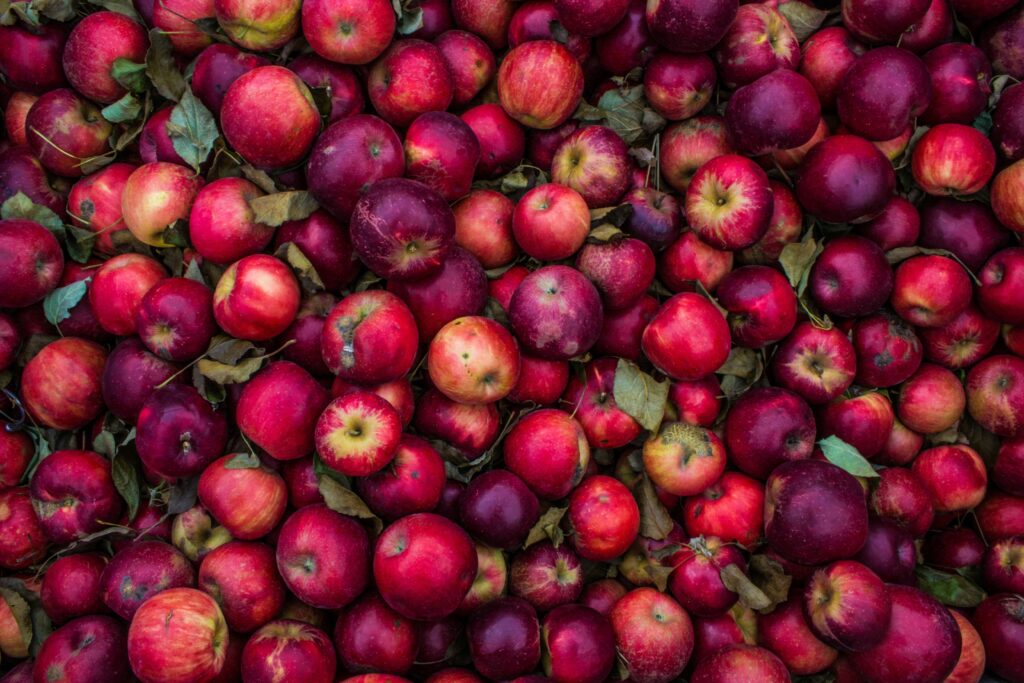
Apples are the most widely grown tree fruit in the United States, with production from Washington to New York.
Climate and Soil: Requires 800-1,200 chill hours (varies by variety). Hardy to Zones 3-8 depending on variety. Average temperatures during growing season: 60-75°F (15-24°C). Deep, well-drained soil, pH 6.0-7.0. Avoid sites with poor air drainage due to late spring frost risk.
Planting Times:
- Northern states: April to May (after soil thaws)
- Central states: March to April
- Southern states: December to February (dormant season)
- Pacific Northwest: November to March
Plant bare-root trees during dormancy. Container trees can be planted spring through fall.
Planting: Dig holes twice the width of root system, same depth as roots. Avoid planting too deep – graft union should be 2-3 inches above soil line. Stake trees in windy locations.
Spacing:
- Standard (full-size rootstock): 20×20 to 25×25 feet
- Semi-dwarf: 12×15 to 15×18 feet
- Dwarf: 6×10 to 10×12 feet
- High-density systems: 3×12 to 5×14 feet
Training and Pruning: Modern systems include central leader, tall spindle, vertical axis. Traditional open vase is less common. Prune during dormancy to establish structure, maintain tree size, and optimize light distribution. Summer pruning controls vigor and improves fruit color.
Pollination: Most apples require cross-pollination from another variety. Plant at least two compatible varieties. Some varieties are triploid (poor pollinators). Crabapples make excellent pollinators.
Fertilization: Young trees: 0.5-1 lb actual nitrogen per year of tree age, maximum 6 lbs per tree annually. Bearing trees: Based on growth and leaf analysis, typically 100-150 lbs N per acre. Avoid excessive nitrogen (reduces fruit quality, increases disease). Calcium important for fruit quality and storage.
Irrigation: Essential in arid regions, beneficial everywhere. Drip irrigation provides water efficiency. Critical periods: bloom, fruit set, fruit development. Typical requirement: 1-2 inches per week during growing season.
Pest and Disease Management: Major challenges include codling moth, apple maggot, plum curculio, aphids, mites, fire blight, apple scab, powdery mildew, cedar apple rust. Integrated pest management combining cultural, biological, and chemical controls. Organic production possible but requires intensive management.
Harvest: Begin production: 2-4 years (dwarf), 4-6 years (standard). Peak production: 10-15 years. Harvest when fruit reaches proper maturity based on background color, ease of separation, seed color, starch conversion, and soluble solids. Multiple picks often necessary. Yields: 400-800 bushels per acre (mature commercial orchard).
Varieties by Region:
- Northeast/Midwest: Honeycrisp, Gala, Fuji, Empire, McIntosh, Jonathan
- Mid-Atlantic: Gala, Fuji, Pink Lady, Granny Smith
- Pacific Northwest: Honeycrisp, Gala, Fuji, Granny Smith, Red Delicious
- Southeast: Gala, Fuji, Granny Smith, low-chill varieties in deep South
Peach (Prunus persica)
Peaches are grown commercially from California to Georgia, with home orchards across much of the U.S.
Climate and Soil: Requires 600-900 chill hours (varies by variety). Hardy to Zones 5-9 depending on variety. Late spring frosts are major risk – avoid frost pockets. Well-drained soil essential, pH 6.0-7.0. Sensitive to wet feet and root diseases.
Planting Times:
- Northern states: Late March to April
- Central states: February to March
- Southern states: December to February
Planting: Plant bare-root trees during dormancy. Set graft union 2-3 inches above soil. Head back (cut to 24-30 inches) at planting to establish low scaffold branches.
Spacing:
- Standard: 18×20 to 20×22 feet
- Semi-dwarf: 12×18 to 15×20 feet
- High-density: 6×14 to 8×16 feet
Training and Pruning: Open center (vase) system is traditional and most common. Perpendicular V and other systems used in modern plantings. Heavy annual pruning required – remove 40-60% of previous year’s growth. Fruit thinning essential: thin to 6-8 inches apart when fruit is thumbnail size.
Fertilization: Young trees: 0.5-0.75 lbs nitrogen per year of age. Bearing trees: 100-150 lbs N per acre based on shoot growth and leaf analysis. Split applications in early spring and after harvest.
Irrigation: Critical for consistent production and fruit size. Drip or micro-sprinkler systems common. Requirement: 1-1.5 inches per week.
Pest and Disease Management: Major issues: plum curculio, oriental fruit moth, peach tree borer, brown rot, peach leaf curl, bacterial spot. Intensive spray programs necessary. Organic production very challenging in humid regions.
Harvest: Begin production: 2-3 years. Peak production: 8-12 years. Harvest when fruit develops characteristic color and slight softness. Multiple picks necessary as fruit doesn’t ripen uniformly. Yields: 300-600 bushels per acre.
Varieties:
- Freestone: Elberta, Redhaven, Cresthaven, Contender (most common for fresh market)
- Clingstone: Used primarily for canning
- Low-chill varieties: Available for Zones 8-9
Cherry (Prunus spp.)
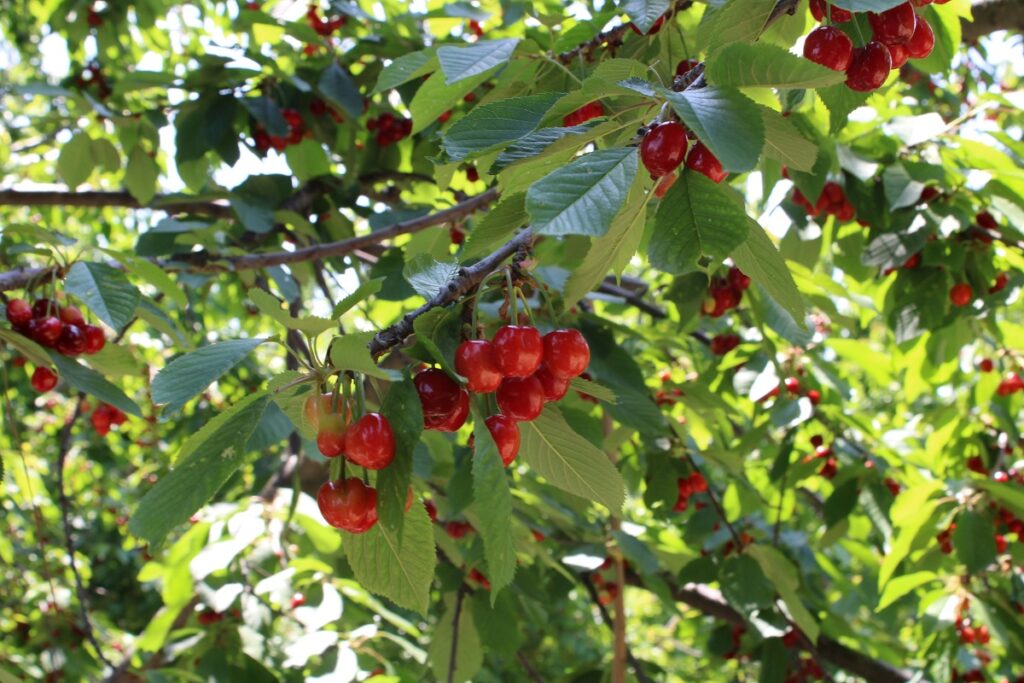
Two main types: sweet cherries (Prunus avium) for fresh eating, and tart/sour cherries (Prunus cerasus) for processing.
Sweet Cherry:
Climate: Requires 800-1,200 chill hours. Hardy to Zones 5-7. Sensitive to spring frost and heavy rain during harvest (fruit splitting). Best in Pacific Northwest, Great Lakes region.
Planting time: Early spring (March-April) in northern regions.
Spacing: 20×20 to 25×30 feet for standard, closer for dwarfing rootstocks.
Pollination: Most varieties require cross-pollination. Plant compatible varieties. Some self-fertile varieties available.
Training: Central leader or multi-leader systems.
Special considerations: Bird protection essential (netting). Rain protection (covers) in some regions to prevent splitting.
Harvest: 4-6 years to production. Hand-picked. Yields: 8,000-15,000 lbs per acre.
Major varieties: Bing, Rainier, Chelan, Sweetheart, Skeena
Tart Cherry:
Climate: Requires 800-1,200 chill hours. Hardy to Zones 4-7. More cold-hardy and less frost-sensitive than sweet cherry.
Planting and spacing: Similar to sweet cherry.
Pollination: Most are self-fertile.
Training: Open center common.
Harvest: Primarily machine-harvested with trunk shakers. 3-5 years to production. Yields: 8,000-12,000 lbs per acre.
Major variety: Montmorency (dominates production)
Pear (Pyrus spp.)
Pears grow in similar regions to apples but are more tolerant of heavy soils and less tolerant of heat.
Climate and Soil: European pears require 600-900 chill hours. Hardy to Zones 5-8. Asian pears slightly more cold-sensitive. Tolerates heavier soil than apples but still requires drainage. pH 6.0-7.0.
Planting Times: Same as apples for each region.
Spacing:
- Standard: 18×20 to 20×25 feet
- Dwarf: 10×12 to 12×15 feet
Training and Pruning: Central leader most common. Minimal pruning compared to apples – excessive pruning increases fire blight susceptibility.
Pollination: Most require cross-pollination. Asian and European pears generally cannot cross-pollinate each other.
Fertilization: Lower nitrogen requirements than apples. Excess nitrogen increases fire blight susceptibility. 50-75 lbs N per acre for bearing trees.
Pest and Disease Management: Fire blight is major disease concern – practice sanitation, avoid excessive nitrogen, remove infected tissue promptly. Codling moth, pear psylla are major pests. Pear rust in some regions.
Harvest: Begin production: 3-5 years. European pears picked mature but hard, ripened off tree. Asian pears ripened on tree. Yields: 300-600 bushels per acre.
Varieties:
- European: Bartlett, Bosc, Anjou, Comice
- Asian: Shinseiki, 20th Century, Hosui
Plum (Prunus spp.)
Multiple species with different climate requirements.
Climate: European plums (P. domestica): 700-1,000 chill hours, Zones 5-7 Japanese plums (P. salicina): 500-900 chill hours, Zones 6-9 American plums (P. americana): Very cold-hardy, Zones 3-7
Planting Times: Early spring in northern climates, dormant season in mild climates.
Spacing: 15×20 to 20×20 feet depending on rootstock and species.
Pollination: Most require cross-pollination. Must be within same species – European and Japanese cannot cross-pollinate.
Training: Open center or central leader.
Thinning: Heavy fruit set requires thinning to 3-4 inches apart.
Fertilization: Moderate, 50-100 lbs N per acre for bearing trees.
Pest and Disease: Plum curculio, black knot, brown rot are major concerns.
Harvest: 3-5 years to production. Harvest when fruit develops characteristic color and slight softness. Yields: 200-400 bushels per acre.
Citrus (Subtropical/Tropical)

Orange, Grapefruit, Lemon, Lime (Citrus spp.)
Citrus production in the U.S. is concentrated in Florida, California, Texas, and Arizona.
Climate: Subtropical, sensitive to freezing. Most citrus hardy to 28-32°F briefly, severe damage below. Florida has humid subtropical climate, California has Mediterranean climate. Each region grows varieties adapted to local conditions.
Growing Zones: 9-11, with microclimates in protected Zone 8 locations.
Planting Times: Spring (March-June) preferred to allow establishment before winter.
Spacing:
- Standard: 20×25 to 25×25 feet
- High-density: 12×20 to 15×22 feet
Rootstock Selection: Critical for disease resistance (especially citrus greening/HLB in Florida), cold tolerance, and soil adaptation. Common rootstocks: Swingle citrumelo, Carrizo citrange, Sour orange (where not prohibited).
Fertilization: Heavy feeders. Split applications totaling 200-300 lbs N per acre annually for mature groves. Micronutrients (especially iron, manganese, zinc) often required, applied foliarly.
Irrigation: Essential for production, especially in California and Arizona. Micro-sprinkler or drip systems. Requirement: 40-60 inches annually depending on evapotranspiration.
Pest and Disease Management: Florida: Citrus greening (HLB) is devastating disease requiring aggressive psyllid control, nutritional programs, and removal of infected trees. Citrus canker also serious. California/Arizona: Asian citrus psyllid (HLB vector) is serious threat. Stringent regulations on tree movement. Other concerns: Scale insects, mites, thrips, melanose, greasy spot.
Harvest: Begin production: 3-5 years. Citrus fruit ripens on tree. Harvest timing based on soluble solids, acid ratio, and market requirements. Commercial harvesting often mechanical (trunk shakers) or hand-picked into bins.
Varieties by Region: Florida: Valencia and Hamlin oranges, grapefruit (red and white), specialty citrus California: Navel and Valencia oranges, lemons, mandarins Texas: Grapefruit (especially Ruby Red), oranges Arizona: Grapefruit, oranges, lemons
Special Considerations:
Freeze Protection:
- Microsprinkler irrigation during freezing events (latent heat of fusion)
- Wind machines to mix air layers
- Heaters in extreme cases
- Grove blankets for young trees
Pollination: Most citrus are self-fertile, though some varieties benefit from cross-pollination.
Stone Fruit Relatives and Others
Apricot (Prunus armeniaca)
Climate: 600-900 chill hours. Hardy to Zones 5-8 but blooms very early, making it susceptible to spring frost. Best in areas with dry springs (California, intermountain West).
Planting: Early spring in cold climates, dormant season in mild areas.
Spacing: 18×20 to 20×22 feet.
Training: Open center.
Special needs: Early bloom requires careful site selection. Sensitive to brown rot in humid climates.
Harvest: 3-4 years to production. Pick when fruit develops color and slight softness.
Persimmon (Diospyros spp.)
Types:
- American persimmon (D. virginiana): Hardy to Zone 5, native
- Asian persimmon (D. kaki): Hardy to Zones 7-10
Climate: American types very cold-hardy; Asian types require milder winters.
Planting: Spring in all regions.
Spacing: 15×20 to 20×25 feet depending on type.
Pollination: Many Asian varieties are self-fertile. American persimmons often require male and female trees.
Fertilization: Light feeders. 50-75 lbs N per acre.
Harvest: Fall, often after frost for American types. Astringent varieties must be fully soft. Non-astringent varieties can be eaten crisp.
Fig (Ficus carica)
Climate: Zones 7-10, with some cold-hardy varieties to Zone 6. Requires long, hot growing season.
Planting: Spring or fall in mild climates.
Spacing: 15×20 to 20×20 feet.
Training: Bush or multi-stemmed. In cold regions, train to facilitate winter protection.
Fertilization: Light. Excessive nitrogen reduces fruit set and cold hardiness.
Harvest: Two crops possible: breba crop on previous year’s wood (early summer) and main crop on current season’s growth (late summer/fall).
Varieties: Brown Turkey, Celeste, Kadota, Mission, Chicago Hardy (cold-hardy)
Berry Crops (Short Stature but Tree-like Management)
Blueberry (Vaccinium spp.)
Types:
- Highbush (V. corymbosum): Zones 4-7
- Rabbiteye (V. ashei): Zones 7-9
- Southern highbush: Zones 7-10
Climate: Requires 150-800 chill hours depending on type. Acidic soil (pH 4.5-5.5) essential.
Planting: Spring in cold climates, fall or spring in mild areas.
Spacing: 4-6 feet in row, 10-12 feet between rows.
Soil preparation: Critical – acidify soil with sulfur if needed (6-12 months before planting). Incorporate peat moss or sulfur. Raised beds improve drainage.
Pollination: Plant at least two varieties for cross-pollination, even with self-fertile types.
Fertilization: Use acid-forming fertilizers. Ammonium sulfate or special blueberry fertilizers. Low rates: 25-50 lbs N per acre.
Irrigation: Shallow roots require consistent moisture. Drip irrigation ideal.
Harvest: 2-3 years to production. Hand-picked or machine-harvested.
Grapes (Vitis spp.)
While technically vines, grapes require similar planning and management to tree fruits.
Types:
- American/hybrid grapes (V. labrusca): Very cold-hardy, Zones 4-8
- European wine grapes (V. vinifera): Zones 6-9, best in arid climates
- Muscadine (V. rotundifolia): Zones 7-9, native to Southeast
Climate: American: 500-800 chill hours, cold-hardy European: 600-1,000 chill hours, heat-loving Muscadine: Low chill, subtropical
Planting: Early spring in most regions.
Spacing: American/European: 8-10 feet in row, 10-12 feet between rows Muscadine: 15-20 feet apart (very vigorous)
Trellis systems: Numerous systems including high cordon, Geneva Double Curtain, VSP (Vertical Shoot Positioning), Four-arm Kniffen.
Pruning: Annual dormant pruning essential – remove 90% of previous year’s growth on American/European types. Less severe for muscadine.
Fertilization: Moderate. 40-80 lbs N per acre for mature vines.
Pest and Disease: Fungal diseases (downy mildew, powdery mildew, black rot) major in humid regions. Japanese beetles, grape berry moth. European varieties difficult in humid climates without intensive spray programs.
Harvest: 2-3 years to production. Harvest when sugars reach target levels and acid drops appropriately.
Propagation Methods
Grafting
Commercial fruit trees are nearly always grafted, combining desirable fruiting variety (scion) with selected rootstock providing disease resistance, size control, or soil adaptation.
Common methods:
- Whip and tongue: For bench grafting same-diameter stocks
- Cleft graft: For top-working larger branches
- Bark graft: Spring grafting on larger rootstocks
- Chip budding: Summer/fall budding of dormant buds
- T-budding: Summer budding when bark slips
Timing: Grafting in late winter/early spring during dormancy. Budding in summer when rootstock bark slips easily.
Cuttings
Some fruits propagate readily from cuttings:
- Figs: Hardwood cuttings in winter/spring
- Grapes: Hardwood cuttings in dormancy
- Pomegranates: Hardwood cuttings
- Blueberries: Softwood cuttings with mist
Tissue Culture
Commercial nurseries increasingly use tissue culture for disease-free, uniform plants. Especially important for:
- Blueberries
- Apples (virus-free rootstocks)
- Strawberries
- Raspberries
Integrated Pest Management
Monitoring
Scout regularly: Weekly during growing season Trap monitoring: Pheromone traps for key pests (codling moth, oriental fruit moth) Degree day models: Predict pest development, time treatments Disease monitoring: Weather-based disease models (apple scab, fire blight)
Cultural Controls
- Site selection (avoid frost pockets, poor drainage)
- Variety selection (disease-resistant when available)
- Sanitation (remove mummies, prune out diseases)
- Proper nutrition (avoid excessive nitrogen)
- Thinning for air circulation
Biological Controls
- Preserve beneficial insects (lady beetles, lacewings, parasitic wasps)
- Bacillus thuringiensis for caterpillars
- Nematodes for soil-dwelling pests
- Pheromone disruption for moths
Chemical Controls
- Use only when monitoring indicates need
- Rotate chemical classes to prevent resistance
- Follow label directions precisely
- Observe pre-harvest intervals
- Keep detailed spray records
Irrigation Management
Systems
Drip/Micro-irrigation: Most efficient, delivers water directly to root zone. Standard for modern orchards.
Micro-sprinklers: Intermediate option, good for frost protection.
Flood/Furrow: Traditional, less efficient but lower investment.
Overhead sprinklers: Generally not recommended (wets foliage, increases disease) except for frost protection.
Scheduling
Based on:
- Soil moisture monitoring (tensiometers, sensors)
- Evapotranspiration (ET) data
- Tree phenology and crop load
- Weather forecasts
Critical periods: bloom, fruit set, fruit sizing. Can reduce irrigation before harvest to concentrate sugars (grapes, stone fruits).
Harvest and Post-Harvest
Harvest Timing
Determined by:
- Days from bloom (calendar-based)
- Fruit color development
- Firmness (pressure testing)
- Soluble solids (refractometer reading)
- Starch-iodine test (apples)
- Background color change
Harvest Methods
Hand harvest:
- Premium fresh market fruit
- Labor-intensive but high quality
- Requires skilled workers
- Multiple picks often necessary
Mechanical harvest:
- Trunk shakers for tart cherries, processing peaches, prunes
- Harvest aids (platforms) for efficiency
- Lower labor cost but may reduce quality
Cooling and Storage
Rapid cooling: Critical for maintaining quality. Hydrocooling, forced-air cooling, or cold storage.
Controlled atmosphere (CA) storage: Apples and pears stored with reduced oxygen, increased CO2, controlled temperature. Extends storage from weeks to months.
Refrigerated storage: Essential for stone fruits, berries, citrus.
Ethylene management: Control ripening through ethylene removal or application.
Organic Fruit Production
Growing interest in organic fruit production, though challenges vary by crop and region.
Requirements
- USDA Organic certification
- Three-year transition period
- Approved inputs only (OMRI listed)
- Detailed record-keeping
- Annual inspections
Challenges
- Limited pest control options
- Disease management in humid regions very difficult
- Lower yields typically
- Higher labor requirements
- Premium prices often needed for profitability
Successful approaches
- Choose disease-resistant varieties
- Site selection critical (dry climates easier)
- Focus on soil health and plant vigor
- Intensive monitoring and cultural controls
- Accept some cosmetic damage
- Market directly to consumers when possible
Economic Considerations
Establishment Costs
High upfront investment required:
- Land preparation
- Trees/planting stock
- Trellis/support systems (where needed)
- Irrigation installation
- Equipment
Costs range from $5,000-$20,000+ per acre depending on crop and system.
Time to Return
- Berries: 2-3 years
- Stone fruits: 3-5 years
- Apples/pears: 4-8 years
- Citrus: 4-7 years
Yields and Returns
Highly variable by crop, region, management. Examples of mature yields:
- Apples: $15,000-$30,000 per acre gross
- Peaches: $10,000-$20,000 per acre gross
- Cherries: $20,000-$40,000 per acre gross
- Citrus: $3,000-$8,000 per acre gross
Operating costs typically 50-70% of gross returns.
Marketing Options
- Wholesale (packers, processors)
- Direct retail (farmers markets, roadside stands, u-pick)
- Agritourism (orchard tours, events)
- Value-added products (cider, jams, dried fruit)
Final Considerations
Fruit tree cultivation in the United States offers opportunities for both commercial production and home orchards. Success requires matching species and varieties to local climate conditions, proper site selection, attention to soil preparation and tree establishment, and ongoing management of nutrition, irrigation, pests, and diseases.
Modern fruit production increasingly relies on high-density plantings, precision irrigation, integrated pest management, and sophisticated post-harvest handling. Advances in rootstock development, variety selection, and management techniques continue to improve productivity and sustainability.
Climate change presents both challenges and opportunities, with shifting growing zones, altered pest and disease pressures, and extreme weather events requiring adaptation. Water availability and quality are growing concerns in many production regions.
This guide provides foundational information applicable across major fruit-growing regions. Individual operations should consult with Extension services, certified crop advisors, and experienced local growers to develop management programs suited to specific conditions. Successful fruit production combines art and science, requiring both technical knowledge and practical experience gained over seasons of observation and adaptation.
Whether establishing a commercial orchard or a backyard fruit garden, careful planning, proper variety selection, and commitment to ongoing management will reward the grower with bountiful harvests of delicious, nutritious fruit.
Learn more: How to Propagate Fruit Trees: Complete Step-by-Step Guide for Home Growers