
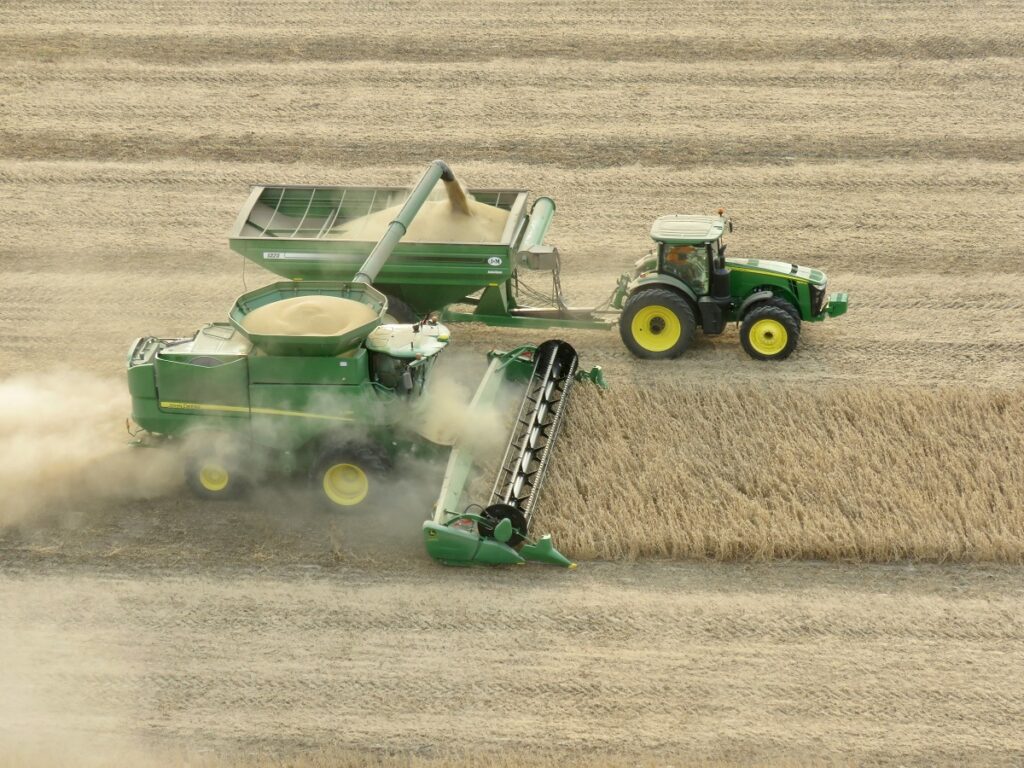
The United States is one of the world’s leading agricultural powers, with grain production forming the backbone of American farming and contributing significantly to global food security. Success in grain cultivation fundamentally depends on knowledge of proper planting times, regional climate conditions, and crop-specific management practices. This comprehensive guide provides essential information for farmers, agricultural technicians, and anyone interested in understanding the complex agricultural calendar of American grain production.
Factors That Determine Planting Times
Climate Conditions
The United States presents remarkable climate diversity, from tropical zones in Hawaii and southern Florida to subarctic conditions in Alaska, with vast temperate regions in between. Planting time selection must consider:
Frost dates: Last spring frost and first fall frost dates are critical for determining safe planting windows. The USDA provides frost date maps for all regions.
Growing season length: Varies from under 100 days in northern states to year-round in southern regions. Match crop maturity requirements to available growing days.
Precipitation patterns: While irrigation is common, natural rainfall patterns still influence planting decisions, especially in the Great Plains and Midwest.
Temperature: Each crop has optimal temperature ranges for germination, flowering, and grain fill. Temperatures outside comfort zones drastically reduce productivity.
Heat units: Many crops are tracked using Growing Degree Days (GDD) or Heat Units (HU), which accumulate based on temperature above a base threshold.

USDA Hardiness Zones and Growing Regions
The United States is divided into USDA Hardiness Zones (1-13) based on average annual minimum winter temperatures. However, for grain production, regional divisions are more practical:
Northern Plains: North Dakota, South Dakota, Montana – short growing season, spring wheat dominant
Central Plains: Nebraska, Kansas, Oklahoma – winter wheat belt, corn production
Midwest/Corn Belt: Iowa, Illinois, Indiana, Ohio, Missouri – prime corn and soybean country
Southeast: Arkansas, Mississippi, Louisiana, Alabama – rice, cotton, soybeans
Pacific Northwest: Washington, Oregon, Idaho – wheat, barley
California Central Valley: Diverse production including rice, wheat, specialty crops
Southwest: Texas, New Mexico, Arizona – cotton, sorghum, wheat with irrigation
Major Grain Crops in the United States
Corn (Maize)
Corn is America’s largest grain crop by volume, primarily grown in the Midwest “Corn Belt.” The crop is used for livestock feed, ethanol production, food products, and exports.
Planting Times:
- Northern States (ND, SD, MN, WI): Late April to late May
- Central Corn Belt (IA, IL, IN, OH): Mid-April to mid-May
- Southern States (MO, KS, NE): Early April to early May
- Deep South (TX, LA, AR): March to April
Soil temperature should reach 50°F (10°C) at 2-inch depth for consistent germination, with 55-60°F (13-16°C) being optimal.
Climate Requirements:
Optimal temperatures: 77-91°F (25-33°C) during growing season. Requires 20-30 inches of water throughout the season, with critical periods from 2 weeks before tasseling to 3 weeks after pollination. Requires 2,400-3,000 Growing Degree Units (GDU) depending on hybrid maturity.
Soil Preparation:
Well-drained soil with pH 6.0-7.0. Corn is a heavy feeder requiring fertile soil. Soil testing should be done 3-6 months before planting to allow time for lime application if needed. Fall tillage or spring field cultivation prepares seedbed.
Planting:
Seed depth: 1.5-2.5 inches depending on soil moisture and temperature. Row spacing typically 30 inches, though 20-inch and twin-row systems are increasingly common. Population: 30,000-38,000 plants per acre, with modern hybrids tolerating higher populations (up to 40,000+).
Management and Fertilization:
Nitrogen is the primary limiting nutrient. Application rates: 120-200 lbs N per acre depending on yield goal and soil organic matter. Split applications reduce leaching: 30% at planting, remainder as side-dress at V6-V8 stage. Phosphorus and potassium based on soil test. Starter fertilizer in-furrow or 2×2 band promotes early growth.
Harvest:
When grain moisture reaches 20-25% for high-moisture storage or 15-20% for standard storage. Harvest typically occurs 110-180 days after planting depending on hybrid maturity. Yields range from 150-220 bushels per acre nationally, with top producers exceeding 300 bushels per acre.
Soybeans
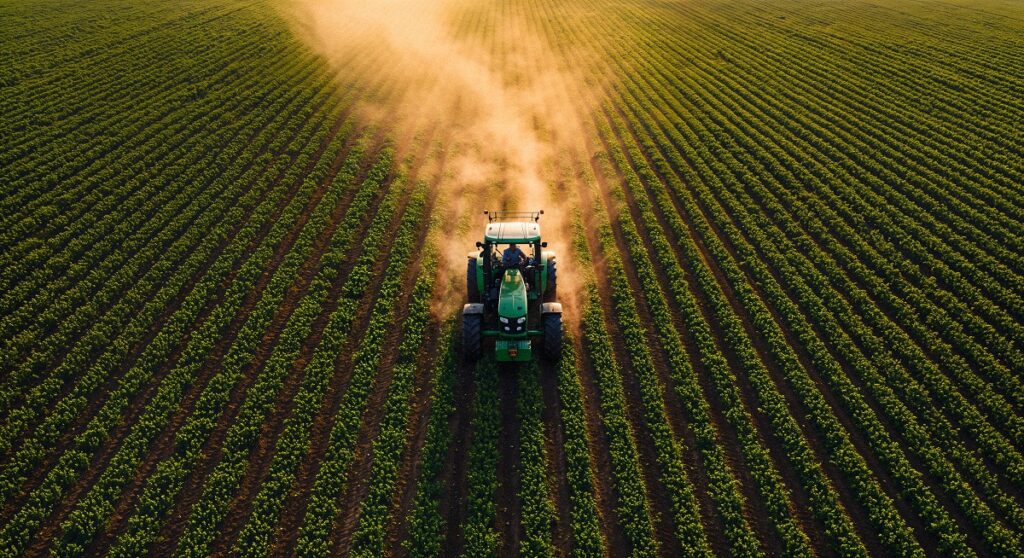
Soybeans are America’s second-largest crop, primarily grown for oil and protein meal. The Midwest dominates production, though cultivation extends from the Canadian border to the Gulf Coast.
Planting Times:
- Northern States (MN, WI, ND, SD): Early May to early June
- Central Midwest (IA, IL, IN, OH): Late April to late May
- Southern States (MO, AR, KS, NE): Mid-April to mid-May
- Deep South (MS, LA, AL): April to June (also possible March and July plantings)
Soil temperature should reach 50°F (10°C), with 60°F (15.5°C) or above being optimal for rapid emergence.
Climate Requirements:
Temperature range: 68-86°F (20-30°C) optimal. Requires 20-30 inches of water during growing season. Photoperiod sensitive – different maturity groups (MG 000 to MG X) are adapted to specific latitudes.
Soil Preparation:
pH 6.0-6.8 ideal. Soybeans tolerate a range of soil types but perform best in well-drained loams. Field preparation similar to corn, though soybeans can follow corn in rotation with minimal tillage.
Planting:
Seed depth: 1-1.5 inches. Row spacing: 7.5-inch drills to 30-inch rows, with narrow rows generally yielding better. Population: 100,000-200,000 plants per acre depending on row spacing and planting date.
Management and Fertilization:
Inoculation with Bradyrhizobium bacteria is essential for nitrogen fixation, especially in fields without recent soybean history. Apply inoculant at planting, protecting from sunlight and heat. Fertilization focuses on phosphorus and potassium based on soil tests. Micronutrients (manganese, iron) may be needed in high pH soils.
Harvest:
When leaves have dropped and beans rattle in pods, typically at 13-15% moisture. Occurs 100-150 days after planting depending on maturity group. National average yields: 50-52 bushels per acre, with top producers exceeding 80 bushels per acre.
Winter Wheat
Winter wheat is planted in fall, overwinters, and is harvested the following summer. It’s the dominant wheat class in the United States, grown primarily in the Great Plains.
Planting Times:
- Northern Plains (MT, ND, SD): September to early October
- Central Plains (NE, KS, CO): Mid-September to mid-October
- Southern Plains (OK, TX): October to November
- Eastern States (IN, OH, MI): September to October
Planting date is critical: early enough for adequate fall growth (4-6 leaves) before winter but late enough to avoid Hessian fly infestation and excessive fall growth.
Climate Requirements:
Requires vernalization (exposure to cold temperatures 32-50°F for 30-60 days) to trigger reproductive phase. Optimal spring growth temperatures: 59-77°F (15-25°C). Requires 12-15 inches of water during growing season.
Soil Preparation:
pH 6.0-7.0. Firm, moist seedbed is essential. Many farmers use no-till following soybeans or other crops, maintaining stubble for snow catch and erosion control.
Planting:
Seed depth: 1-2 inches. Row spacing: 6-10 inch drills common. Seeding rate: 60-120 lbs per acre (1-2 million seeds per acre) depending on soil conditions, planting date, and variety.
Management and Fertilization:
Nitrogen timing varies by region. Common programs include: fall application of 30-50 lbs N, topdress in late winter/early spring with 60-100 lbs N, and additional application at jointing if needed. Phosphorus and potassium applied based on soil test, often in fall.
Harvest:
Late June to early August depending on region. Harvest when grain moisture reaches 12-14%. Average national yields: 52-58 bushels per acre, with irrigated High Plains production exceeding 80 bushels per acre.
Spring Wheat
Spring wheat is planted in spring and harvested in late summer. Primary production areas are the Northern Plains where winters are too severe for winter wheat.
Planting Times:
- Northern Plains (ND, SD, MT, MN): April to early May
- Pacific Northwest (WA, OR, ID): March to April
Plant as early as soil conditions permit to maximize use of spring moisture and avoid hot, dry weather during grain fill.
Climate Requirements:
Cooler season crop, optimal growth at 59-77°F (15-25°C). Sensitive to heat stress above 86°F (30°C) during flowering and grain fill. Requires 12-15 inches of water.
Soil Preparation:
pH 6.0-7.0. Spring tillage to prepare seedbed, though no-till adoption is increasing.
Planting:
Seed depth: 1-1.5 inches. Row spacing: 6-8 inch drills. Seeding rate: 80-120 lbs per acre.
Management and Fertilization:
All nitrogen typically applied at or shortly after planting: 80-120 lbs N per acre. Phosphorus and potassium based on soil test.
Harvest:
August to September. Grain moisture 12-14%. National average yields: 48-50 bushels per acre for Hard Red Spring wheat.
Rice
Rice production in the United States is concentrated in Arkansas, California, Louisiana, Mississippi, Missouri, and Texas. Two main production systems exist: water-seeded in California and drill-seeded with delayed flood in the South.
Planting Times:
- Arkansas, Mississippi, Louisiana, Missouri: April to May
- Texas Gulf Coast: March to April
- California Sacramento Valley: Late April to mid-May
Soil temperature should reach 60°F (15.5°C) for good germination.
Climate Requirements:
Warm season crop requiring 140-180 frost-free days. Optimal temperatures: 77-86°F (25-30°C). Requires continuous flood after establishment (except California dry-seeded systems).
Soil Preparation:
Fields must be laser-leveled for uniform water depth. Clay or clay-loam soils hold water best. Precision leveling is critical for water and fertilizer efficiency.
Planting:
Drill-seeded (Southern states):
- Seed depth: 0.5-1 inch
- Row spacing: 7-8 inches
- Seeding rate: 70-100 lbs per acre
- Establish flood 3-4 weeks after planting
Water-seeded (California):
- Pre-germinated seed broadcast into flooded field
- Seeding rate: 100-150 lbs per acre
- Maintain flood throughout season
Management and Fertilization:
Heavy nitrogen feeder. Application: 120-180 lbs N per acre split between pre-plant, early flood, and mid-season topdressing. Precise water management is critical for yield and quality.
Harvest:
When grain moisture reaches 18-22%. Timing is critical to minimize grain breakage during milling. Typical maturity: 120-150 days. Average national yields: 7,500-8,000 lbs per acre (rough rice).
Sorghum (Grain Sorghum)
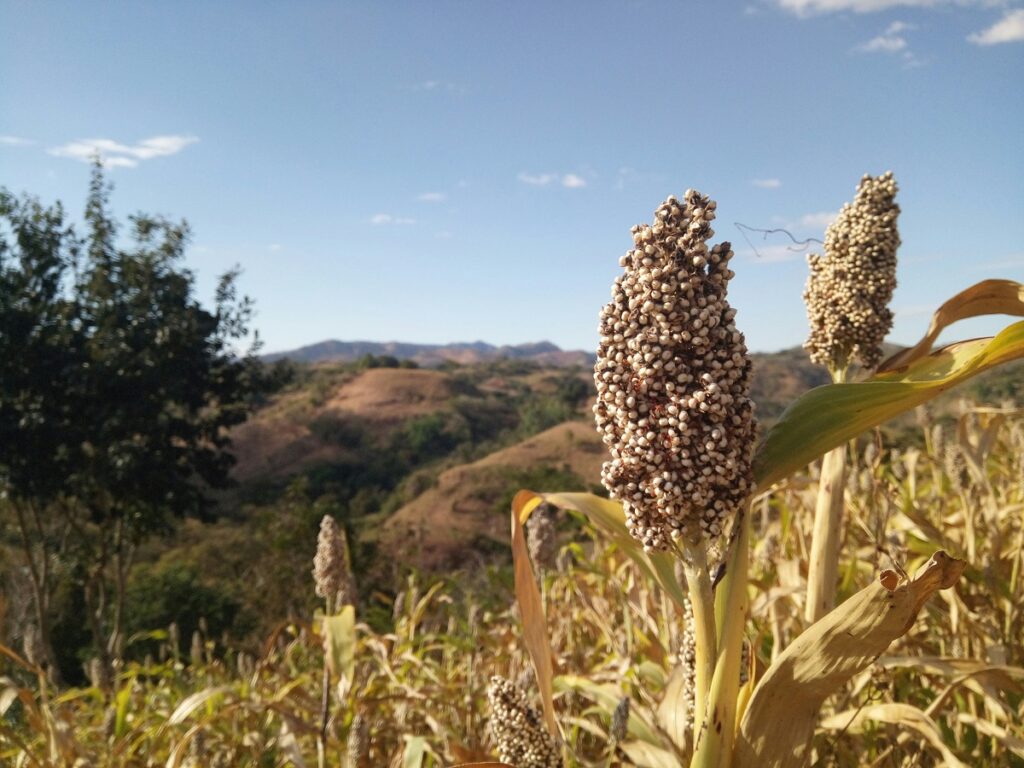
Sorghum is grown primarily in the Great Plains as a drought-tolerant alternative to corn. It’s used for livestock feed, ethanol production, and food products.
Planting Times:
- Texas, Oklahoma, Kansas: April to June
- Nebraska, Colorado: May to early June
Soil temperature should reach 60-65°F (15.5-18°C) for good germination. Later planting than corn reduces bird damage and greenbug pressure.
Climate Requirements:
Temperature range: 68-95°F (20-35°C). More drought-tolerant than corn, requiring 18-25 inches of water. Can complete grain fill under drier conditions than corn.
Soil Preparation:
pH 5.5-8.5 (more tolerant of pH extremes than corn). Performs on less fertile soils but responds to good fertility.
Planting:
Seed depth: 0.5-1.5 inches (shallow for good emergence). Row spacing: 15-40 inches depending on region and rainfall. Population: 40,000-120,000 plants per acre (higher populations in higher rainfall areas).
Management and Fertilization:
Nitrogen: 60-120 lbs N per acre depending on yield goal. 40% at planting, 60% at 4-6 leaf stage. Phosphorus and potassium based on soil test.
Harvest:
When grain moisture reaches 18-22%, typically 90-130 days after planting. Birds can be a serious problem during grain maturation. Average national yields: 70-75 bushels per acre.
Barley
Barley is grown primarily in the Northern Plains and Pacific Northwest, used for malting (brewing) and livestock feed.
Planting Times:
Spring Barley:
- Northern Plains (ND, MT, ID): April to early May
- Pacific Northwest: March to April
Winter Barley:
- Idaho, Washington, Oregon: September to October
Plant spring barley very early to avoid heat stress during grain fill.
Climate Requirements:
Cool season crop, optimal 59-68°F (15-20°C). Matures faster than wheat (70-100 days for spring types). Sensitive to heat and drought during flowering.
Soil Preparation:
pH 6.0-7.5. Avoid highly acidic or alkaline soils. Well-drained soils preferred.
Planting:
Seed depth: 1-2 inches. Row spacing: 6-8 inch drills. Seeding rate: 70-110 lbs per acre.
Management and Fertilization:
Nitrogen: 60-100 lbs N per acre for malting barley (excess nitrogen reduces malting quality), 80-120 lbs N per acre for feed barley. Phosphorus and potassium based on soil test.
Harvest:
When grain moisture reaches 12-14%. Malting barley requires careful harvest to minimize kernel damage. Average national yields: 70-75 bushels per acre.
Crop Rotation and Succession Systems
Importance of Rotation
Continuous monoculture depletes specific nutrients, builds up crop-specific pests and diseases, can lead to soil compaction, and reduces overall soil health. Crop rotation with different root systems, nutrient needs, and pest complexes is fundamental for sustainability.
Recommended Rotation Schemes
System 1: Corn-Soybean Rotation (Midwest Standard)
- Year 1: Corn
- Year 2: Soybeans
- Repeat
This simple rotation breaks pest cycles, with soybeans fixing nitrogen for following corn. Some farmers extend to corn-corn-soybeans to maximize corn acres.
System 2: Small Grain Integration
- Year 1: Corn
- Year 2: Soybeans
- Year 3: Winter wheat (with cover crop after wheat)
- Year 4: Corn
Adds diversity, allows different herbicide modes of action, spreads workload.
System 3: Cover Crop Enhancement
- Year 1: Corn with cereal rye cover crop interseeded or planted after harvest
- Year 2: Soybeans with multi-species cover crop blend after harvest
- Repeat with variations
System 4: Extended Rotation (4-5 years)
- Year 1: Corn
- Year 2: Soybeans
- Year 3: Winter wheat
- Year 4: Alfalfa (hay)
- Year 5: Alfalfa
- Return to Year 1
Cover Crops
Cover crops protect and improve soil between cash crops:
Legumes: Hairy vetch, crimson clover, field peas – fix nitrogen, typically 50-150 lbs N per acre
Grasses: Cereal rye, oats, annual ryegrass – produce biomass, scavenge residual nitrogen, improve soil structure
Brassicas: Radish, turnips, rapeseed – deep taproots break compaction, scavenge nutrients
Multi-species mixes: Combine benefits, improve soil biology diversity
Modern Technologies and Practices
No-Till and Conservation Tillage
Conservation tillage practices have revolutionized American agriculture:
No-till: Zero soil disturbance except narrow seed slot. Maintains crop residue on surface.
- Benefits: Soil conservation, moisture retention, reduced fuel use, carbon sequestration
- Challenges: Requires specialized equipment, may need different pest management
Strip-till: Tills only narrow strip where seeds will be planted, leaving remainder undisturbed.
- Benefits: Combines no-till advantages with improved seedbed warming and residue management
Reduced tillage: Limited tillage operations, maintaining 30%+ residue cover.
Precision Agriculture
Technology enables site-specific management:
GPS guidance: Auto-steer systems reduce overlap, improve efficiency, enable precision planting
Variable rate technology (VRT): Adjust seeding rates, fertilizer application based on soil zones or yield maps
Yield monitoring: Combine-mounted sensors map productivity, identify problem areas
Remote sensing: Satellite and drone imagery identify crop stress, guide scouting and treatment
Soil sampling: Grid or zone sampling creates detailed fertility maps
Prescription maps: Data-driven application maps optimize input use
Seed Technology
Modern seed genetics have dramatically increased yields:
Hybrid vigor: Corn, sorghum, and some other crops benefit from hybrid seed
Genetically modified (GM) traits:
- Herbicide tolerance (Roundup Ready, Liberty Link, Enlist)
- Insect resistance (Bt toxins for corn borer, rootworm, others)
- Stacked traits combining multiple resistances
Seed treatments:
- Fungicides protect against seedling diseases
- Insecticides control early-season pests
- Inoculants (for soybeans, other legumes)
- Nematicides where needed
Integrated Pest Management (IPM)
IPM reduces pesticide use while maintaining productivity:
Monitoring: Regular scouting, pest identification, population tracking
Economic thresholds: Treat only when pest populations justify cost of control
Cultural controls: Crop rotation, planting dates, resistant varieties
Biological controls: Beneficial insects, microbial pesticides where effective
Chemical controls: Used judiciously when other methods insufficient
Legal Aspects and Certifications
Pesticide Applicator Licensing
Commercial and private applicators must be licensed in most states. Requirements include passing exams on:
- Pesticide laws and regulations
- Safety and environmental protection
- Proper application techniques
- Integrated pest management
Conservation Compliance
Farmers receiving USDA program benefits must comply with conservation provisions:
- Highly Erodible Land (HEL): Must have approved conservation plan
- Wetland Conservation: Cannot convert wetlands to cropland
Organic Certification
USDA Organic certification requires:
- Three-year transition period with no prohibited substances
- Detailed record-keeping
- Annual inspections
- Approved inputs and practices only
- Certification through USDA-accredited agency
Good Agricultural Practices (GAP)
Voluntary food safety certification for crops entering fresh market or processing. Covers harvest, handling, storage practices.
Storage and Marketing
Grain Drying and Storage
Proper storage prevents losses and allows marketing flexibility:
Safe storage moisture:
- Corn: 13-15%
- Soybeans: 11-13%
- Wheat: 12-13.5%
- Sorghum: 13-14%
- Rice: 12-13%
Storage management:
- Aeration to manage temperature
- Monitor for insects and moisture
- Use fumigation or other pest control as needed
- Maintain structural integrity of bins
Marketing Strategies
Cash sales: Immediate delivery at current market price
Forward contracts: Lock in price for future delivery
Futures and options: Hedge price risk through commodity exchanges (Chicago Board of Trade)
Grain elevators: Local buyers that aggregate production
Cooperatives: Farmer-owned organizations provide marketing, supply services
Crop insurance: Federal crop insurance program provides yield and revenue protection
Regional Considerations
Midwest Corn Belt
Highly productive region with deep, fertile soils (Mollisols). High rainfall (30-40 inches annually) supports rainfed production. Corn-soybean rotation dominant. Challenges: wet springs delaying planting, fall weather impacting harvest.
Great Plains
Semi-arid climate with lower rainfall (15-30 inches). Winter wheat dominant in southern plains, spring wheat in northern plains. Irrigation important in some areas (Ogallala Aquifer). Challenges: drought, wind erosion, hail damage.
Pacific Northwest
Wheat and barley production in dryland and irrigated systems. Low humidity reduces disease pressure. Challenges: limited rainfall in dryland areas, volunteer grain issues.
Southeast
Warm, humid climate. Rice, cotton, soybeans primary crops. Irrigation common. Challenges: high disease and insect pressure, hurricane damage.
California
Intensive, irrigated production. Rice in Sacramento Valley, diverse crops in Central Valley. Challenges: water availability, regulation, high land and input costs.
Climate Change Considerations
Agriculture is adapting to changing conditions:
Warmer temperatures: Extended growing seasons in north, heat stress concerns in south
Precipitation changes: More variable rainfall, increased drought in some regions
Extreme weather: More frequent severe storms, floods, droughts
Adaptation strategies:
- Earlier planting dates where feasible
- Heat-tolerant varieties
- Improved irrigation efficiency
- Diversified crop rotations
- Enhanced soil health for resilience
Final Considerations
Grain production in the United States requires technical knowledge, careful planning, and constant attention to weather, markets, and crop conditions. Success depends on matching crop selection and management to local conditions, following recommended planting dates and practices, and using appropriate technology for the scale and goals of the operation.
American agriculture has achieved remarkable productivity gains through research, technology adoption, and farmer innovation. Challenges remain including sustainability concerns, market volatility, and climate change. Well-informed farmers who utilize best management practices, stay current with technology, and manage risk effectively are best positioned to succeed.
This guide provides general guidelines applicable across major production regions. Individual situations require evaluation by agricultural professionals, considering specific local conditions of climate, soil, infrastructure, and markets. Access to Extension services, certified crop advisors, and agricultural consultants is valuable for optimizing grain production.
The future of American grain production will increasingly focus on sustainable intensification – producing more with less environmental impact through precision agriculture, improved genetics, enhanced soil health, and integrated management systems. Farmers who embrace these approaches while maintaining economic viability will lead the industry forward.
learn more: How to Grow Sorghum Successfully: A Comprehensive U.S. Guide