What if you could significantly boost your crop yields while cutting fertilizer costs by up to 50%? It sounds too good to be true, but thousands of farmers across the United States are doing exactly that through a proven agronomic practice called seed inoculation.
Seed inoculation is one of agriculture’s best-kept secrets—a simple, low-cost technique that harnesses the power of beneficial microorganisms to naturally enhance plant growth and nutrition. Yet many growers, especially those new to farming or organic practices, aren’t taking full advantage of this powerful tool.
In this comprehensive guide, you’ll discover everything you need to know about seed inoculation: what it is, why it works, which crops benefit most, and—most importantly—how to properly inoculate seeds for maximum results. Whether you’re managing thousands of acres or tending a small homestead garden, this technique can dramatically improve your bottom line while promoting more sustainable agriculture.
What Is Seed Inoculation?
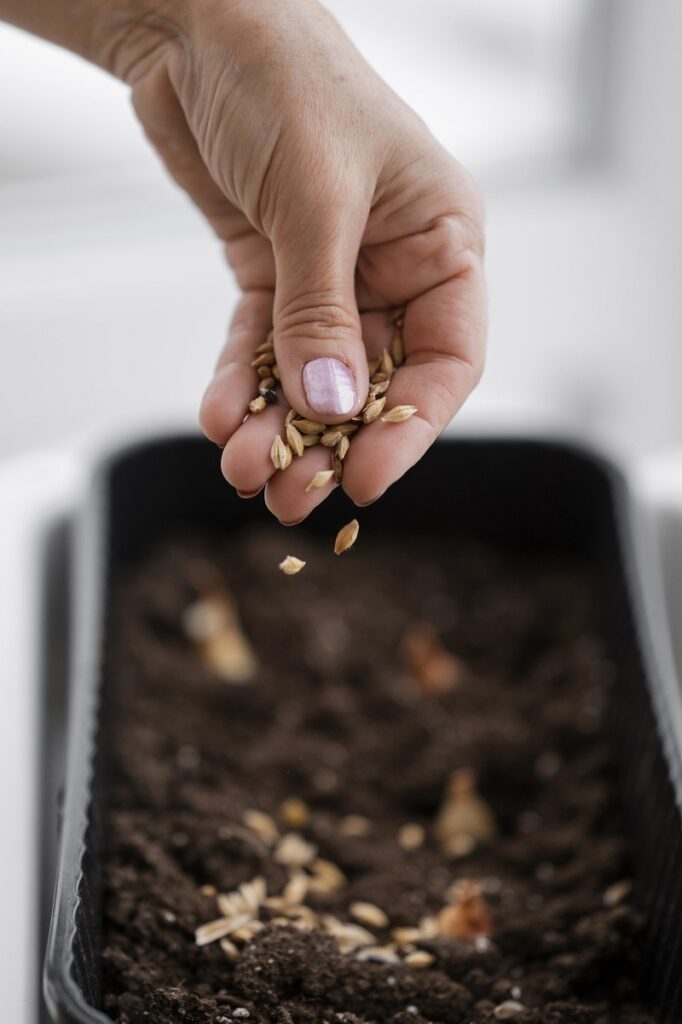
Seed inoculation is the process of applying beneficial microorganisms—primarily nitrogen-fixing bacteria—to seeds before planting.
These microscopic partners colonize plant roots, forming a symbiotic relationship that benefits both organisms. The bacteria receive carbohydrates from the plant, while the plant gains access to atmospheric nitrogen converted into usable forms.
The Science Behind Inoculation
The Key Players:
- Rhizobia bacteria (multiple species) for legumes
- Azospirillum for grasses and cereals
- Mycorrhizal fungi for various crops
- Other beneficial microbes like Bacillus and Pseudomonas
The Process:
- Bacteria are applied to seed surface before planting
- Seeds are planted in soil
- Bacteria colonize emerging roots
- Symbiotic relationship forms
- For legumes: nodules develop on roots
- Bacteria fix atmospheric nitrogen (N₂) into ammonia (NH₃)
- Plant receives nitrogen in usable form
- Plant growth and yield increase
Most Common: Rhizobial Inoculation
The most widely used seed inoculation involves Rhizobium, Bradyrhizobium, and related bacteria for legume crops. These bacteria form visible nodules on roots where nitrogen fixation occurs.
Nitrogen Fixation Capacity:
- Soybeans: 100-200 lbs N/acre
- Alfalfa: 150-250 lbs N/acre
- Peas: 80-150 lbs N/acre
- Clovers: 100-200 lbs N/acre
This nitrogen becomes available not only to the inoculated crop but also to subsequent crops in the rotation.

Why Seed Inoculation Matters for Modern Agriculture
Economic Benefits
Reduced Fertilizer Costs:
- Nitrogen fertilizer represents a major expense ($0.50-1.00 per lb)
- Proper inoculation can reduce or eliminate nitrogen fertilizer needs
- Savings of $50-150+ per acre for legume crops
Increased Yields:
- Studies show 10-25% yield increases with proper inoculation
- More consistent performance across varying soil conditions
- Better drought tolerance due to improved root systems
Return on Investment:
- Cost: $3-8 per acre for inoculant
- Return: $50-200+ per acre in increased yields and reduced inputs
- ROI often exceeds 500-1000%
Environmental Benefits
Sustainability:
- Reduces synthetic nitrogen fertilizer use
- Lowers greenhouse gas emissions from fertilizer production
- Decreases nitrate leaching into groundwater
Soil Health:
- Improves soil structure and organic matter
- Enhances microbial diversity
- Builds long-term soil fertility
- Leaves nitrogen residue for following crops
Reduced Carbon Footprint:
- Nitrogen fertilizer production is energy-intensive
- Biological nitrogen fixation uses only sunlight energy
- Contributes to carbon sequestration goals
Agronomic Advantages
Improved Plant Health:
- Better root development
- Enhanced nutrient uptake beyond nitrogen
- Increased stress tolerance
- Better stand establishment
Crop Rotation Benefits:
- Legumes fix nitrogen for subsequent non-legume crops
- Breaks pest and disease cycles
- Improves overall soil tilth
Crops That Benefit from Seed Inoculation
Primary Legume Crops (Rhizobia Inoculation)
Field Crops:
- Soybeans (Bradyrhizobium japonicum)
- Dry beans (Rhizobium leguminosarum biovar phaseoli)
- Peas (Rhizobium leguminosarum biovar viciae)
- Chickpeas/Garbanzo (Mesorhizobium ciceri)
- Peanuts (Bradyrhizobium species)
- Lentils (Rhizobium leguminosarum biovar viciae)
- Cowpeas (Bradyrhizobium species)
Forage Legumes:
- Alfalfa (Sinorhizobium meliloti)
- Clovers – Red, White, Crimson, Alsike (Rhizobium leguminosarum biovar trifolii)
- Vetch (Rhizobium leguminosarum)
- Trefoil (Mesorhizobium loti)
Cover Crops:
- Hairy vetch
- Winter peas (Austrian, field)
- Crimson clover
- Sunn hemp
Non-Legume Crops with Inoculation Options
Co-Inoculation with Azospirillum:
- Corn
- Wheat
- Sorghum
- Rice
- Turf grasses
Mycorrhizal Inoculation:
- Most vegetables
- Fruit trees
- Ornamentals
- Pasture grasses
Types of Seed Inoculation Methods
Understanding different application methods helps you choose the best approach for your operation.
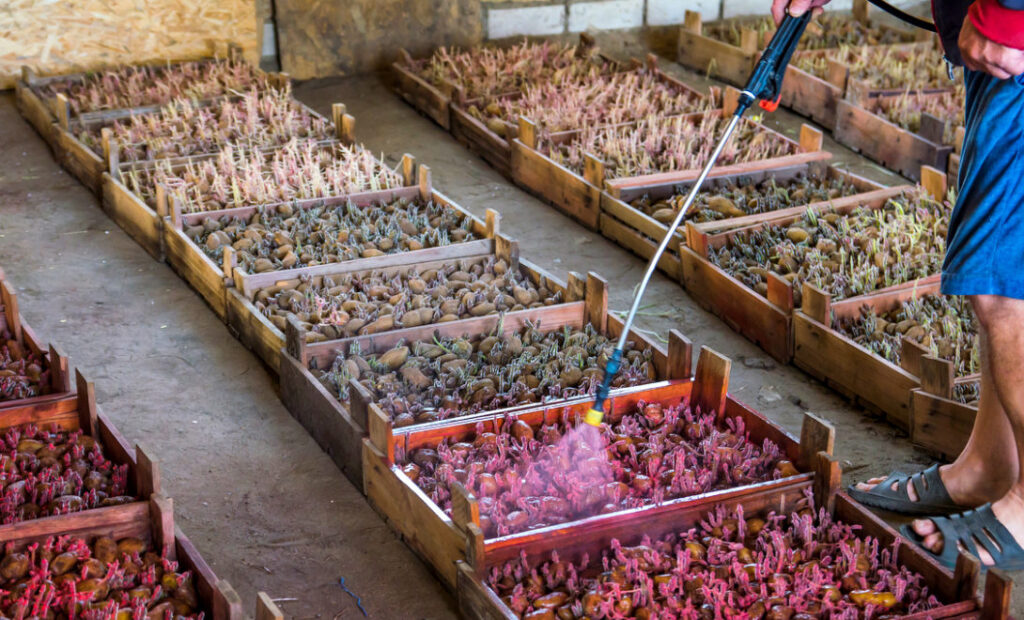
Method 1: On-Seed Application
Description: Inoculant applied directly to seeds before planting
Best For:
- Small to medium acreages
- Farms without in-furrow equipment
- Maximum bacteria-seed contact
- Organic operations
Types:
- Peat-based (powder): Traditional, good shelf life
- Liquid: Easier application, requires sticker
- Granular: Less common for on-seed use
Advantages:
- High bacteria-to-seed contact
- Lower cost per acre
- Proven effectiveness
- Flexible timing (within limits)
Disadvantages:
- Must plant within 24 hours
- Incompatible with some seed treatments
- Labor-intensive for large operations
- Sensitive to heat and sunlight
Method 2: In-Furrow Application
Description: Inoculant applied directly into seed furrow at planting
Best For:
- Large-scale operations
- When seeds have chemical treatments
- Precision agriculture systems
- Challenging soil conditions
Application:
- Liquid inoculant injected via planter
- Applied 1-2 inches from seed
- Requires specialized equipment or planter modifications
Advantages:
- Compatible with treated seeds
- Can inoculate immediately before planting
- Higher bacteria survival rates
- Works well in dry conditions
Disadvantages:
- Higher cost (more inoculant needed)
- Requires equipment investment
- More complex application
Method 3: Co-Inoculation
Description: Applying multiple beneficial microorganisms together
Common Combinations:
- Rhizobia + Azospirillum: Nitrogen fixation + root growth promotion
- Rhizobia + Mycorrhizae: Nitrogen + phosphorus/water uptake
- Multiple Rhizobia strains: Broader adaptation
Benefits:
- Enhanced nitrogen fixation (up to 20% more)
- Improved root system development
- Better stress tolerance
- Higher overall yields
Considerations:
- More expensive
- Requires compatible products
- Follow specific application guidelines
How to Inoculate Seeds: Complete Step-by-Step Guide
Follow these detailed steps for successful seed inoculation.
Step 1: Select the Right Inoculant
Critical Factors:
Crop-Specific Match:
- Each legume requires specific rhizobia species
- Using wrong species results in failure
- Check product label carefully
Quality Indicators:
- CFU count: Minimum 1 x 10⁹ viable cells per gram (higher is better)
- Expiration date: Use only fresh product
- Storage conditions: Has it been properly stored?
- EPA/State registration number
- Manufacturer reputation: Choose established brands
Where to Purchase:
- Local farm supply stores
- Agricultural cooperatives
- Online agricultural suppliers
- Direct from manufacturers
Cost Range: $3-8 per acre (on-seed); $8-15 per acre (in-furrow)
Step 2: Prepare Your Workspace
Requirements:
- Location: Cool, shaded area (60-75°F ideal)
- Cleanliness: Free from chemical residues
- Tools: Clean mixing containers, measuring equipment
- Timing: Work during coolest part of day
Avoid:
- Direct sunlight (kills bacteria rapidly)
- Hot surfaces or equipment
- Areas with chemical contamination
- Dusty or windy conditions
Step 3: Check Seed Treatment Compatibility
Critical Consideration: Many fungicide and insecticide seed treatments are toxic to rhizobia.
Compatibility Check:
- Read seed tag for treatment details
- Check inoculant label for compatibility information
- Contact seed treatment or inoculant manufacturer if uncertain
If Incompatible:
- Use in-furrow application instead
- Apply inoculant at higher rate
- Use protective polymer coating inoculants
- Consider untreated seed if available
Generally Compatible:
- Most insecticide treatments
- Some fungicides (check specific products)
Often Incompatible:
- Metalaxyl (Apron, Allegiance)
- Captan
- Some broad-spectrum fungicides
Step 4: Prepare Sticker Solution (For Liquid/Powder Inoculants)
A sticker helps inoculant adhere to seeds and protects bacteria during handling.
Homemade Sugar Solution (Most Common):
- 2 tablespoons sugar per 1 cup water (about 12% solution)
- Dissolve completely
- Use immediately
Alternative Stickers:
- Molasses solution: 2-3 tablespoons per cup of water
- Commercial stickers: Follow label rates
- Skim milk powder: 2 tablespoons per cup water
Application Rate:
- Use just enough to lightly moisten seeds
- Seeds should be damp, not soaked
- Approximately 1-2 cups solution per 50 lbs seed
Step 5: Apply Inoculant to Seeds
For Peat-Based (Powder) Inoculants:
- Measure seeds accurately
- Work in manageable batches (50-100 lbs)
- Place seeds in clean container
- Concrete mixer for large amounts
- Large tub or barrel for small amounts
- Must be clean and dry
- Apply sticker
- Spray or pour evenly over seeds
- Mix thoroughly until slightly damp
- Add inoculant
- Follow label rate (typically 2-4 oz per 50 lbs seed)
- Sprinkle evenly over seeds
- Mix thoroughly
- Rotate/mix for 2-3 minutes
- Every seed should have light coating
- Peat creates characteristic brown/black color
For Liquid Inoculants:
- Shake container thoroughly
- Bacteria settle during storage
- Apply sticker first (if required by label)
- Add liquid inoculant
- Measure carefully per label directions
- Typically 0.5-2 oz per 50 lbs seed
- Mix immediately and thoroughly
- Continue mixing 2-3 minutes
- Ensure even distribution
Step 6: Dry Seeds in Shade
Critical Step:
- Spread seeds in single layer
- Use clean tarp or shallow trays
- Keep in shade or dark area
- Air dry 15-30 minutes
- Until seeds flow freely again
- Don’t over-dry
- NEVER use heat or direct sun
- Monitor temperature
- Keep below 85°F
- Move to cooler area if needed
Step 7: Plant Within Optimal Window
Timing is Critical:
Best: Plant within 8 hours of inoculation
Acceptable: Within 24 hours
Maximum: 48 hours (significant bacteria loss occurs)
Why Timing Matters:
- Bacteria begin dying immediately after application
- Heat accelerates death
- Seed handling reduces bacteria
- Planter mechanisms cause friction and heat
Storage If Delayed:
- Keep in cool, dark place
- Avoid piles (generate heat)
- Do not expose to sunlight
- Re-inoculate if delayed beyond 48 hours
Step 8: Planting Considerations
Planter Settings:
- Avoid excessive seed drop heights
- Minimize agitation
- Keep hopper covered
- Work during cooler hours
Soil Conditions:
- Adequate moisture for germination
- Soil temperature above 50°F
- Proper pH (6.0-7.0 ideal for most legumes)
Depth:
- Follow normal planting depth for crop
- Ensure good seed-to-soil contact
In-Furrow Application Method
For larger operations or when on-seed inoculation isn’t feasible.
Equipment Requirements
Liquid Injection System:
- Mounting bracket on planter
- Manifold and hoses
- Check valves
- Nozzles at each row unit
Pump Options:
- Electric pump with controller
- Hydraulic drive pump
- Gravity feed system
Cost: $1,000-3,000 for complete system (varies by planter size)
Application Procedure
- Fill tank with inoculant
- Use full bottles when possible
- Note expiration dates
- Calibrate application rate
- Follow label recommendations (typically 1-2 quarts per acre)
- Verify spray pattern at each row
- Position nozzles correctly
- 1-2 inches beside and below seed
- Not directly on seed
- Monitor during planting
- Check for clogs
- Verify consistent flow
- Refill as needed
- Rinse system after use
- Prevent bacterial buildup
- Use clean water
Verifying Success: Nodulation Check
When to Check
Timing: 4-6 weeks after planting (varies by crop and conditions)
Soybeans: 4-5 weeks
Alfalfa: 5-6 weeks
Peas/Beans: 4-5 weeks
How to Evaluate Nodulation
Field Inspection:
- Dig up several plants
- Sample from multiple locations
- Include roots
- Wash roots gently
- Examine for nodules
- Look for small bumps on roots
- Size varies from pinhead to pea-sized
- Usually on tap root and larger lateral roots
- Cut nodules open
- Active nodules: Pink or reddish interior (leghemoglobin present)
- Inactive nodules: White or gray interior
- Desired: Pink nodules indicate active nitrogen fixation
Scoring System:
Excellent: 10+ pink nodules per plant
Good: 5-9 pink nodules per plant
Fair: 2-4 nodules, some pink
Poor: 0-1 nodules or all white/gray
What If Nodulation Is Poor?
Possible Causes:
- Inoculant failure (old, stored improperly, wrong species)
- Incompatible seed treatment
- Soil too acidic (pH < 6.0)
- Soil too dry during establishment
- Excess soil nitrogen (suppresses nodulation)
- Poor seed-to-soil contact
Solutions:
- Re-inoculate with fresh product via in-furrow or foliar spray
- Test and adjust soil pH
- Ensure adequate moisture
- Reduce nitrogen fertilizer applications
Troubleshooting Common Problems
Problem: Seeds Won’t Flow Through Planter
Cause: Too much sticker or inoculant; seeds clumping
Solutions:
- Use less sticker solution
- Allow longer drying time
- Add small amount of talc or graphite to improve flow
- Consider in-furrow application instead
Problem: Poor Germination
Cause: Excessive moisture from inoculation process
Solutions:
- Reduce sticker amount
- Ensure adequate drying
- Check for seed treatment compatibility issues
Problem: No Nodules Forming
Cause: Multiple possibilities (see verification section above)
Solutions:
- Verify inoculant is fresh and crop-specific
- Check soil pH (lime if below 6.0)
- Review seed treatment compatibility
- Consider soil test for excess nitrogen
- Re-inoculate if within first 3 weeks
Problem: Uneven Inoculant Coverage
Cause: Inadequate mixing
Solutions:
- Mix longer (minimum 3 minutes)
- Use better mixing equipment
- Work with smaller batches
Problem: Inoculant Effectiveness Concerns
Cause: Storage or handling issues
Solutions:
- Store inoculant in refrigerator (40-45°F) until use
- Never freeze
- Check expiration dates
- Purchase from reputable suppliers
- Use within season of purchase
Best Practices for Maximum Success
Storage Guidelines
Before Opening:
- Refrigerate at 40-50°F
- Keep in original packaging
- Protect from light
- Check expiration dates regularly
After Opening:
- Use entire container if possible
- Reseal tightly if partial use
- Use within 2-3 days
- Mark date opened
Timing Recommendations
Best Times to Inoculate:
- Morning: Cool temperatures, lower sun intensity
- Evening: After day’s heat has passed
- Cloudy days: Reduced UV exposure
Avoid:
- Midday in summer
- Hot, dry conditions
- Windy conditions (dust contamination)
Record Keeping
Document your inoculation practices:
- Product name and lot number
- Application date and rate
- Crops and acres treated
- Field locations
- Nodulation check results
- Yield results
This data helps refine practices and demonstrates value.
Economic Analysis: Does Inoculation Pay?
Cost-Benefit Example (Soybeans, 100 acres)
Costs:
- Inoculant: $500 (on-seed application)
- Labor: $100 (2 hours)
- Total Investment: $600
Benefits:
- Nitrogen savings: $5,000 (100 lbs N/acre × $0.50/lb × 100 acres)
- Yield increase: $4,000 (2 bu/acre increase × $10/bu × 100 acres)
- Total Return: $9,000
Net Benefit: $8,400
ROI: 1,400%
Even with modest yield improvements, inoculation consistently proves profitable.
Frequently Asked Questions
Q: Do I need to inoculate every year?
A: For most field crops, yes. While some bacteria persist in soil, annual inoculation ensures adequate populations and introduces improved bacterial strains.
Q: Can I inoculate and plant the next day?
A: Acceptable but not ideal. Plant within 24 hours maximum; 8 hours is better. Bacteria viability decreases over time.
Q: Will inoculation work if I’ve grown legumes on this field before?
A: Yes, and you should still inoculate. Native populations may be inadequate or inefficient. Fresh inoculant introduces superior strains.
Q: Is organic inoculant different from conventional?
A: The bacteria are the same, but organic-certified products use approved carriers and have been certified by organic certifiers.
Q: Can I mix inoculant with fungicide in the planter box?
A: Generally no. Most fungicides kill bacteria. Use in-furrow application if seeds are treated, or check compatibility.
Q: Does soil nitrogen level affect inoculation success?
A: Yes. High soil nitrogen (>40 ppm) suppresses nodulation. Plants won’t form nodules if adequate N is already available.
Quick Reference Checklist
Before Inoculating:
- ☐ Verified inoculant matches crop species
- ☐ Checked expiration date
- ☐ Confirmed seed treatment compatibility
- ☐ Prepared clean, shaded work area
- ☐ Gathered materials: sticker, containers, measuring tools
During Inoculation:
- ☐ Mixed sticker and inoculant thoroughly with seeds
- ☐ Achieved even coverage on all seeds
- ☐ Dried seeds in shade (15-30 minutes)
- ☐ Kept seeds cool and protected
At Planting:
- ☐ Planting within 24 hours of inoculation
- ☐ Using proper planting depth and technique
- ☐ Monitoring planter performance
After Planting:
- ☐ Scheduled nodulation check (4-6 weeks)
- ☐ Documented practices and results
- ☐ Stored remaining inoculant properly
Conclusion: Invest in Inoculation for Better Returns
Seed inoculation represents one of agriculture’s highest-return investments. For a minimal cost of $3-8 per acre, you can significantly boost yields, reduce fertilizer expenses, improve soil health, and contribute to more sustainable farming practices.
Key Takeaways
✅ Proper inoculation can fix 100-250 lbs N/acre naturally
✅ ROI typically exceeds 500-1000% on legume crops
✅ Match inoculant species to your specific crop
✅ Keep bacteria cool and protected from heat and sunlight
✅ Plant within 24 hours of inoculation for best results
✅ Check nodulation at 4-6 weeks to verify success
✅ Annual inoculation recommended even on previously inoculated fields
Your Action Plan
- Determine which crops you’ll grow that benefit from inoculation
- Source quality inoculant from reputable suppliers before planting season
- Review seed treatments for compatibility issues
- Prepare workspace and materials for inoculation day
- Follow proper technique as outlined in this guide
- Verify success through nodulation checks
- Document results to refine future practices
Remember: The bacteria you apply today will work all season to feed your crops, build your soil, and increase your profits. This tiny investment of time and money consistently delivers outsized returns while supporting more sustainable, environmentally responsible agriculture.
Ready to boost your yields naturally? Start planning your seed inoculation strategy today—your crops, your wallet, and your soil will thank you!
You may also like: Complete Guide to Crop Fertilizers: Types, Selection, and Application Strategies